

Over the past several months, I've been sharpening my thinking on Artificial Intelligence (AI) — not as a technology trend to track, but as a structural force reshaping how organizations operate, compete, and create value. That exploration recently brought me through an executive course at MIT Sloan on the implications of AI for business and operations strategy. One idea from that program has stayed with me more than any other.
Successful AI deployment isn't about models. It's about designing systems of collective intelligence between people and machines. That framing matters because it shifts the entire question. Most organizations approach AI by asking, “What tools should we adopt?” The better question is, “How do we redesign the way decisions are made and executed?” These sound similar, but they lead to entirely different outcomes.
The real challenge isn't implementing AI. It's architecting intelligent operating models where strategy, operations, and technology are tightly connected.
Collective Intelligence Is the Multiplier
There's a persistent myth that AI transformation is about replacing human work with machine work. The MIT Sloan framing cuts directly against this. The actual competitive advantage of AI comes from the combination of human judgment, creativity, and social intelligence working alongside machine speed, memory, and pattern recognition. Neither alone is as powerful as the two designed to work together. Organizations that understand this stop asking, "What can we automate?" and start asking, "How do we design systems where humans and machines each do what they're genuinely best at?" That's a design challenge. An organizational challenge. And ultimately, a leadership challenge.
Transformation Is a Journey, Not a Leap
One of the frameworks from the course that I found most practically useful was a phased view of AI maturity — and the logic of why the sequence matters. Organizations that try to skip phases tend to struggle not because the technology fails, but because the organizational foundations aren't there yet.
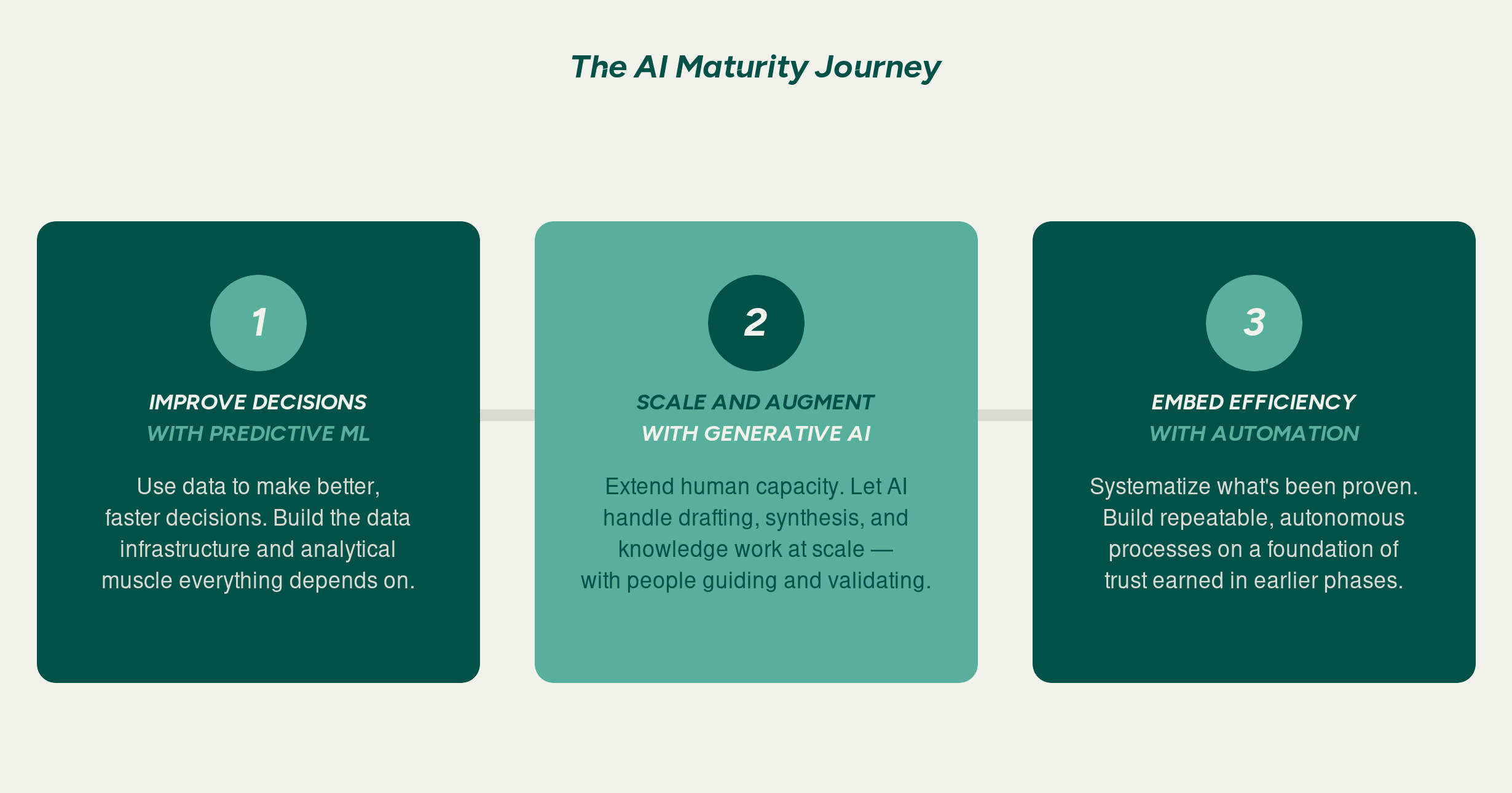
Each phase builds capability, trust, and the organizational readiness required for the next. Jumping straight to full automation without the data foundations or human-AI collaboration patterns in place is a common, and costly, mistake.
People Transformation Is the Hardest Part
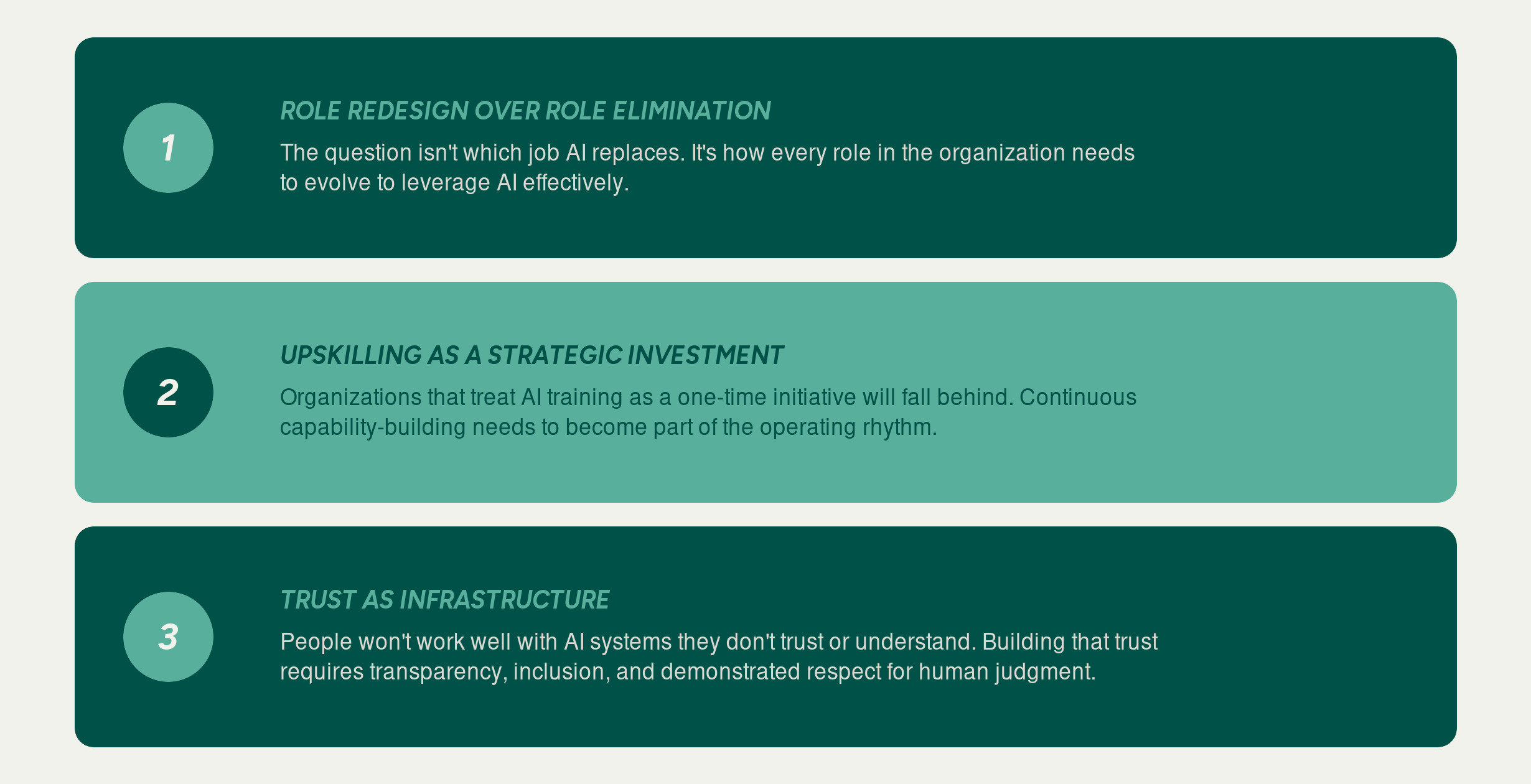
Of everything reinforced through the course, this is the point I feel most strongly about from direct experience: AI strategy is, at its core, a people transformation strategy.
Technology is the easier part. The harder work is helping individuals and teams genuinely evolve. Rethinking roles, building new capabilities, shifting mindsets, and creating environments where people feel equipped and empowered to work effectively alongside AI rather than feeling threatened by it.
The Divergence Is Already Happening
What's becoming increasingly clear is that a divide is opening between two types of organizations. Those treating AI as a collection of isolated use cases will capture incremental efficiencies at best. Those redesigning how decisions are made, how work flows, and how humans and machines collaborate will build something far more sustainable: genuine structural advantage.
The difference isn't budget. It isn't access to better models. It's whether leadership is willing to do the deeper, harder work of reimagining their operating model; not just their tech stack.
I'm energized by this challenge. The organizations that get this right won't just be more efficient, they will be more adaptive, more resilient, and better equipped for whatever comes next.