


In Season 4 of Ted Lasso, Ted meets the stage manager of a London theater. Surrounded by costumes and stage props, Ted asks her how she became a stage manager. After a reflective pause, she answers that she wants to help the actors do their best work.

Are you trying to foster innovation at your company?
We often think of star scientists, engineers, and designers as innovators. Of course, that is true. And, like a stage manager bringing a play to life from behind the scenes, others are also vital to enable innovation. In The Lean Startup, Eric Ries describes these individuals as “the people who support them, nurture them, and hold them accountable.”
I’m a consultant and corporate innovation strategist. I’ve led teams in both the early and late stages of innovation as they ideated and implemented, on everything from basketball shoes and running leggings to multi-state electricity markets. Every bit of it has been a privilege, and like a stage manager, my work has largely been just out of the spotlight.
Here are some tips I’ve learned for innovation “stage managers” to create the conditions in which innovation can flourish.
It’s not an exhaustive list, and it does not cover every phase of bringing new ideas to market, but some of these suggestions may help if you’ve ever struggled to refresh your business with new thinking, respond to the changing world, or develop a concept.
- Keep your team focused on the higher purpose. Are we empowering consumers to achieve their wellness goals? Are we literally keeping the lights on for millions of people and businesses while making that energy more affordable, reliable, and sustainable? These are powerful motivators. Remind your team of your company’s higher mission at every chance you get. There will always be reasons to get bogged down: a project disappointment, a complex and mandatory template, unclear roles and responsibilities in your matrixed organization. Distraction and demoralization are human but surmountable obstacles when you stay focused on the summit.
- Communicate clear parameters for your innovators to operate within. The team’s time, budget, and focus must be synchronized with your overarching strategy; there is freedom in constraint. (My local paint store has a playful sign encouraging customers to make color choices within 30 minutes.) Since people learn in different ways, and have different comfort levels for asking questions, teach the concepts of strategy in various formats:
- Hold town halls and smaller group discussions in every office where you have teammates.
- Get to know as many people as you can so you have honest dialogue with the quieter voices.
- Turn a visible space into a strategy wall or room: company strategy, target consumer profile and insights, innovation process flows, and capability-building initiatives. Keep the door open and invite people in. As they question and probe the strategy, they create a feedback loop that makes it stronger.
- Imagine the future. Put your innovators in the mindset of the target consumers of the future who will drive growth: Summarize key trends across macroeconomics, demographics, technology, and other seemingly distant topics to paint a vision of the future. Make these large and visual. Post them throughout the office.
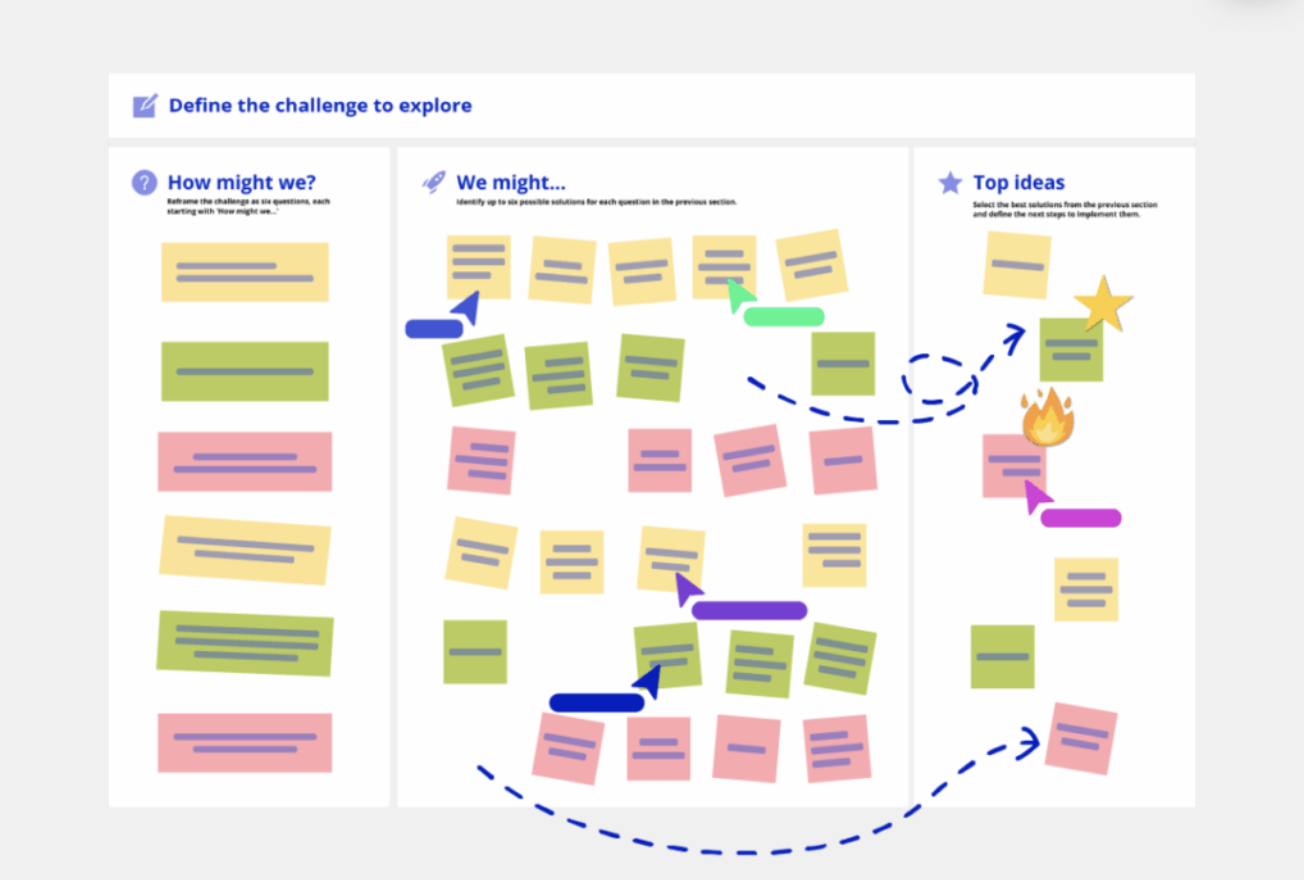
- Foster a bubbly environment for ideas. Only a fraction of ideas reach the market, so keep the pipeline full. Run year-round, cross-functional ideation sessions: no senior leaders, no email, offsite if possible. Start with a clear problem, use divergent exercises like Crazy 8s and How Might We, protect psychological safety, and plan your follow-up.
- Promote trust through transparency. Treat failure as a bend, not a break. Document the lessons and share them openly. After our client launched a multistate day-ahead energy market, we helped them publish the early challenges and their fixes for the power companies that would be joining next. The client welcomed good and bad feedback from the first market participant, owned mistakes, and laid out a clear path forward. Transparency like this builds trust and quiets speculation.
- Act as translator while your team tests and prototypes. Brilliant people often speak different professional languages and hold different priorities: upstream and downstream, executives and front lines, company and customer, ideators and implementers. Your job is to listen closely to the technical team, understand what each stakeholder wants, and restate technical ideas in terms that resonate with them. This applies in B2B as much as B2C.
- Remember that innovation isn’t only for products. Design firm IDEO’s 2026 IQ Report noted that building a culture of experimentation is a common struggle for large companies. Yet the companies that scored highest on IDEO’s innovation behaviors, which include autonomy and experimentation, reported nearly three times the average revenue growth. At Percipio, employees design internal initiatives that support our strategy. I helped build a process for learning what energizes our consultants, which will influence project staffing and career conversations. Projects like this make me feel trusted, keep my work varied, and build the habit of always looking for a better way to do things.
- Innovation doesn’t end when the brilliant inventors hand it off. Recognize that the implementation of innovation is the beginning of the next team’s work. The more you can involve them upstream, the better. (There’s a difference between “too many cooks in the kitchen” and genuine collaboration.) Document as much as you can to retain that origin story spark.
- Continuously refine the process: Stay open to new ways of visualizing your innovation pipeline. Keep your dashboards in plain view so you see the whole portfolio, not just a few favorite projects. Routine operations work often reveals where to rebalance for a healthier, more diverse pipeline.
It’s a privilege to help exceptional people accomplish exceptional things. Creating an environment in which big and small breakthroughs happen takes thought and planning. It’s the type of “stage manager” work that doesn’t always get the spotlight or the applause, but it’s deeply fulfilling. It also makes substantial impact within the company and out in the world. Reach out to Percipio Consulting Group if you’d like to take the next step in clearing the way for innovation at your organization.